Coldham's Common
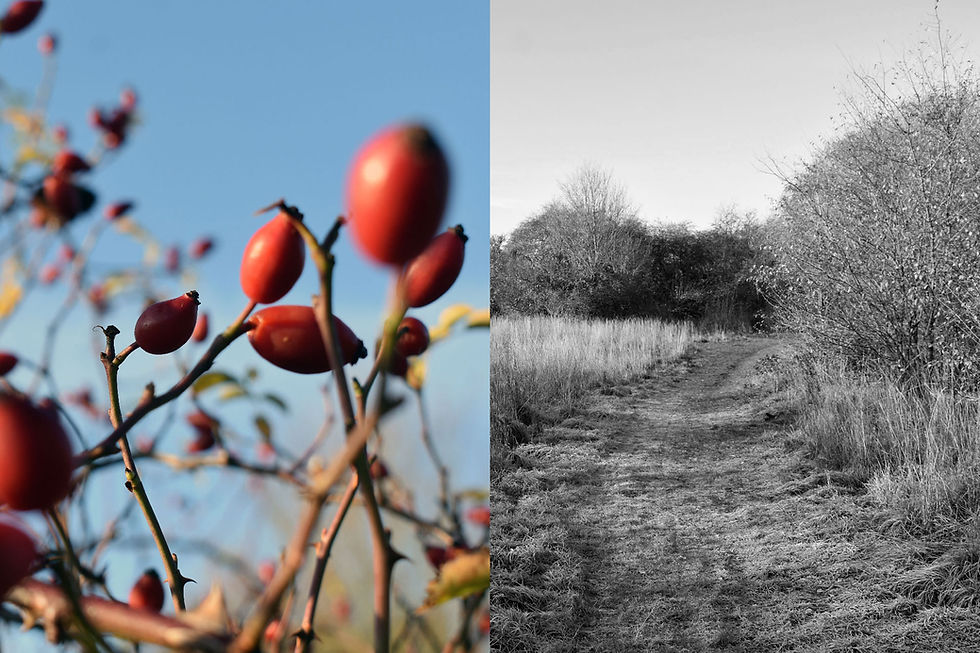
It’s the first heavy frost of the year. Underfoot, the grass is crisp and makes a satisfying crunch with each step, and our hot breath condenses in the still air.
We’re at Coldham’s Common local nature reserve. The Common is one of Cambridge’s largest parks, with a quarter of the land designated as a nature reserve, home to a variety of chalk grassland plant species. The reserve is covered by a mixture of grassland, scrub, and woodland. Nestled between a baseball pitch and the railway line is a small parcel of land, with scrub lining the perimeter and a path snaking its way through the middle. This is our work site for today.

I’m one of many volunteers. We’re all dotted about the land, armed with loppers, tree poppers, shears, and saws. We’re here to thin the scrub that’s encroaching on the grassland, opening up the grassland for the chalkland species to flourish. In a thriving ecosystem, animals would graze on the land, pulling up roots and keeping the brambles and saplings at bay. Today, we’re doing that job. Cutting, sawing, and pruning back hawthorn, bramble, ash, and blackthorn.

Wrapped up in coats, hats, and heavy-duty gardening gloves, we get to work. Brambles loom over from above, pinching hats and hair until they’re met with a decisive snip from a pair of loppers. Gloved hands pull at the lengths of thorny stems, unravelling the tangle of scrub. Once cut free, the brambles, hawthorn and blackthorn are laid down on a pile, which steadily grows as more cuttings are added. Another volunteer takes turns visiting the piles of vegetation, pitchfork in hand, twirling the cuttings like spaghetti. He carries the pitchfork over his shoulder to a heap, hidden away in the woodland to the east of the site. Curious dog walkers meander past, asking what we’re doing and encouraging us to keep up the good work. The job is tiring but rewarding, an opportunity to connect with the land and absorb the changing seasons.

The cycle of cutting and clearing continues throughout the morning until lunch is announced with a loud call. The volunteers gather in the centre of the grass clearing, sitting down around a pair of Kelly Kettles that fill the air with steam. We pick our spots carefully, finding spots of grass that are free from frost but shaded by trees to avoid the dazzling autumn sun, which sits low in the sky. Sandwiches and flasks of soup are tucked into eagerly, while trays of stem ginger or chocolate and hazelnut biscuits are passed around. A collection of dark green plastic mugs is filled with teabags, before the boiled water is poured over them, revealing the bundle of sticks still burning at the base of the kettles.

After the tea is finished, the biscuits are eaten, and chatter about the previous weekend winds down, we get back to work. The chance to start working again is a welcome opportunity to warm up. We return to fending off brambles and thorns, and before long, the one heap in the woodlands becomes several. The scrub that once dominated the land is starting to retreat. As the afternoon winds down, a chill returns to the air. We agree to finish for the day, and volunteers trundle back over the Common, wheeling bikes and carrying tools.

The land, once bustling with people, falls quiet; only the tuneful singing of the robins remain.
Comments